Restful Sleep Starts with a Relaxed Jaw
Grinding or clenching your teeth at night might seem harmless, but it’s often a sign of deeper dysfunction. Bruxism can lead to enamel loss, headaches, facial pain, and disrupted sleep. We uncover the root cause, whether it’s airway restriction, stress, or jaw misalignment, and create a non-invasive plan that restores healthy sleep and protects your joints.



Over 70 Centres

Decades

Tens of Thousands
Why People Grind Their Teeth
Bruxism is common during sleep and can damage enamel, overload the TMJ, and trigger head and neck pain. While stress can play a role, many cases are connected to the airway. When breathing narrows at night, the brain may recruit the jaw muscles to clench or shift the lower jaw in an attempt to restore airflow. Over time this reflex strains the joints and surrounding muscles.
“Sleep bruxism has been classified as a sleep-related movement disorder and is strongly associated with both sleep-disordered breathing and temporomandibular disorders.”
Balasubramaniam R, Klasser GD, Cistulli PA, Lavigne GJ. J Dent Sleep Med. 2014;1(1):27–37.
“In adults with obstructive sleep apnea, the occurrence of sleep bruxism is elevated, suggesting that increased respiratory effort can trigger jaw muscle activity during sleep.”
Journal of Clinical Sleep Medicine.
Our team at the TMJ & Sleep Therapy Centre of Raleigh-Durham evaluates sleep, airway size, jaw position, bite mechanics, and muscle balance to find your specific drivers. Then we create a non-surgical plan to protect your teeth, calm the TMJ, and improve sleep quality.
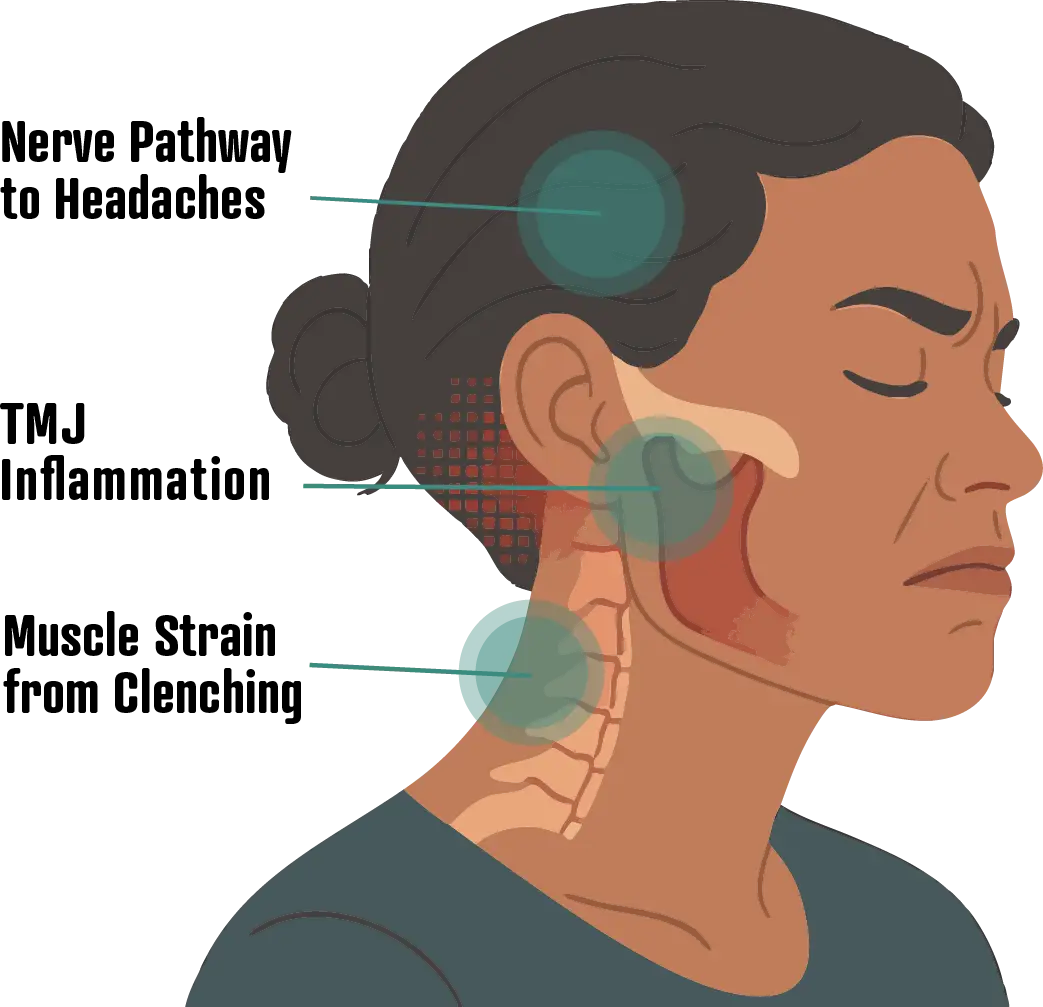
When To Seek Treatment
These red flags suggest clenching is affecting your teeth, jaw, or sleep:
Chips, flattened cusps, or new sensitivity indicate forces strong enough to erode enamel and load the TMJ.
Waking with tight, sore muscles points to overnight bracing that often accompanies airway restriction.
High bite forces from grinding can fracture fillings, crowns, or natural enamel and inflame the joint capsule.
Frequent micro-awakenings, snoring, or gasping suggest an airway component that should be screened and treated.
Relief begins with the right diagnosis
You do not have to wake up sore or exhausted. At the TMJ & Sleep Therapy Centre of Raleigh-Durham, we use precise, non-surgical care to protect your teeth, calm TMJ strain, and improve sleep quality.


Frequently Asked Questions About Teeth Grinding (Bruxism)
Teeth grinding can be confusing because it feels involuntary. These answers explain why it happens and how targeted, non-surgical care can help.
Real Stories, Real Relief
At the TMJ & Sleep Therapy Centre of Raleigh-Durham, we understand how life-changing it can be to finally find relief from TMJ pain and sleep-related issues.
TMJ & Sleep Therapy Centre
Global Expertise
As proud members of TMJ International, we are part of a global team dedicated to advancing collaborative care in TMJ disorders and sleep therapy. Together, we bring innovation, expertise, and compassionate treatment to help patients find lasting relief and a healthier quality of life.


Over 70 Centres
Decades